Virginia’s political landscape stands at a crossroads. At the center: a voter-approved congressional map that leans heavily in favor of Democrats—one that could be blocked by the state’s Supreme Court. The map, drawn by an independent commission and ratified by ballot referendum, was intended to end decades of partisan gerrymandering. Instead, it has sparked a legal firestorm, pitting democratic legitimacy against constitutional scrutiny.
The justices now face a rare dilemma: uphold a map passed directly by voters, or strike it down over claims it violates the state constitution’s equal representation clauses. The decision could reshape Virginia’s congressional delegation—and set a precedent for how courts treat voter-validated redistricting efforts nationwide.
A Democratic Edge in a Purple State
Virginia has long been a political bellwether. Once reliably Republican, it has trended blue in federal elections over the past 15 years. President Biden won the state by 10 points in 2020, and Democrats have held the governorship and statewide offices more frequently since 2017. But the new congressional map amplifies that blue tilt in a way that has unsettled Republicans and some legal observers.
Under the proposed map: - 7 districts are solidly Democratic - 4 are competitive, with Democratic lean - Only 2 are considered Republican-favoring
This distribution gives Democrats an estimated 75% chance of winning 7 or more of the 11 seats—despite the state’s electorate being more evenly divided. Republican leaders argue the map violates the principle of "one person, one vote" by concentrating Republican voters into fewer districts, effectively diluting their influence.
The map was developed by the Virginia Redistricting Commission, a bipartisan body established after voters approved a constitutional amendment in 2020 to end legislative gerrymandering. When the commission deadlocked, the task fell to the state Supreme Court, which appointed special masters to draw the final lines. Those maps were then upheld by voters in a 2023 referendum.
Yet now, that same court is being asked to overturn what it helped create—and what voters ratified.
Legal Challenge: Constitution vs. Voter Will
The lawsuit, brought by Republican voters and backed by state GOP leaders, argues that the new congressional map violates Article II, Section 6 of the Virginia Constitution, which mandates that districts be “compact,” “contiguous,” and composed of “communities of interest.” More critically, it claims the map intentionally underrepresents Republican voters in violation of equal protection principles.
Lead plaintiffs allege that district lines were drawn to “pack” conservative voters into a few districts—particularly in Southside Virginia and the Shenandoah Valley—while “cracking” Republican-leaning suburbs across multiple Democratic-leaning districts. This, they say, results in a systematic devaluation of their votes.
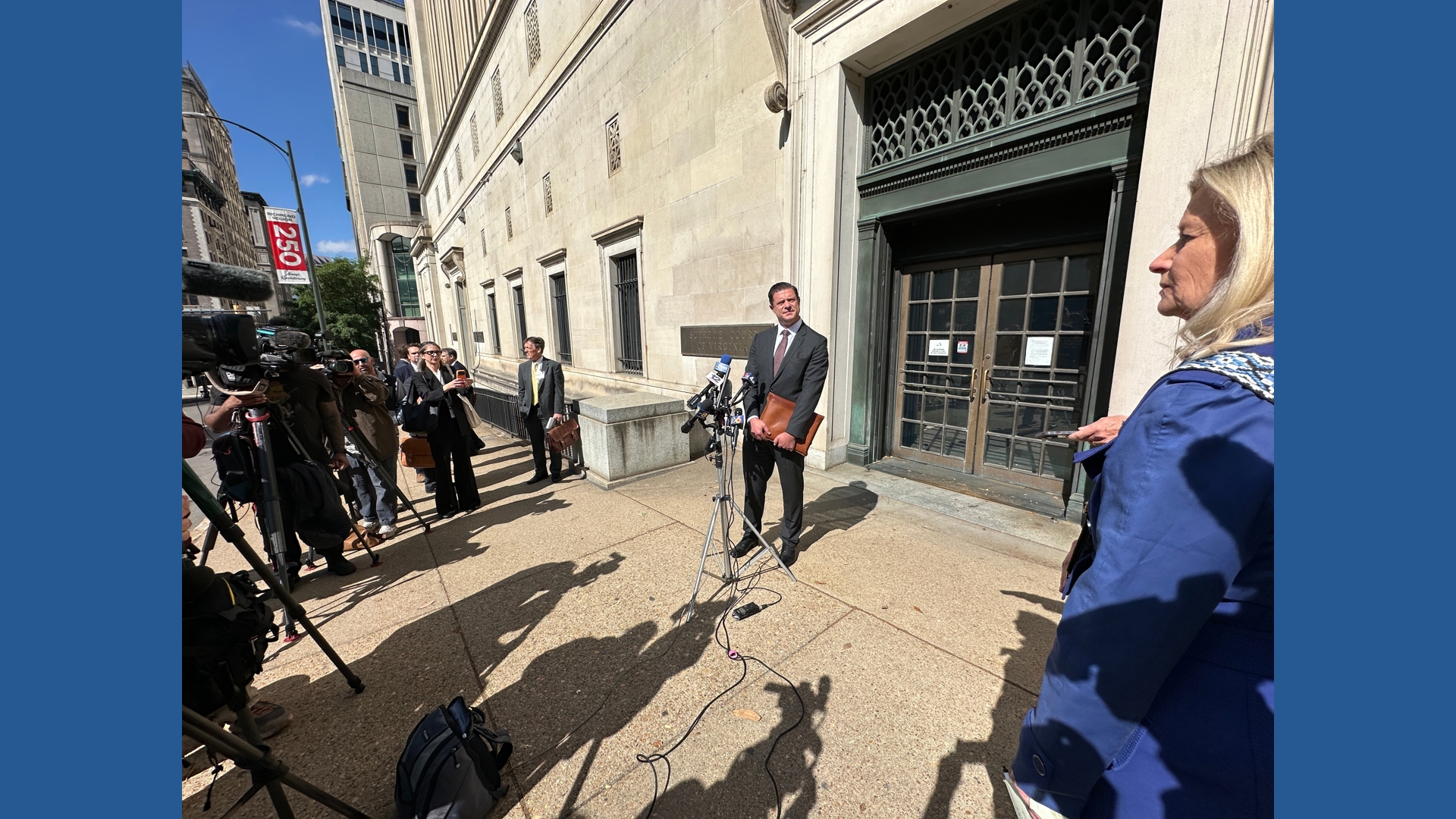
Legal experts are divided. “This is uncharted territory,” said Dr. Lena Pruitt, constitutional scholar at UVA. “Courts usually defer to voter-approved measures, especially on redistricting. But if the map demonstrably violates constitutional standards of fairness, the court may feel compelled to intervene—even if it means overriding the electorate.”
The core tension: Can a map approved by voters still be unconstitutional?
The Role of the Special Masters When the bipartisan commission failed to agree on final maps in 2021, the Virginia Supreme Court—then composed of justices appointed by a Democratic-controlled legislature—appointed two special masters: Dr. Michael McDonald, a nationally recognized political scientist, and Professor Bernard Grofman.
Their mandate: produce a map that was fair, neutral, and compliant with state and federal law. They relied on demographic data, Voting Rights Act requirements, and political competitiveness metrics. The resulting map was adopted by the Court in 2022 and later affirmed by voters.
Now, some Republican justices on the reconstituted court have expressed skepticism about the methodology used. Justice S. Bernard Goodwyn, in a recent concurring opinion, questioned whether the special masters gave undue weight to past election results—a practice that, he argued, “bakes partisan outcomes into the process.”
Critics counter that ignoring political data risks violating the federal Voting Rights Act, especially in a state with a history of minority vote dilution. “You can’t draw fair maps in Virginia without looking at where minority communities live and how they’ve historically been underrepresented,” said civil rights attorney Naomi Rucker.
Political Implications of a Court Intervention
If the court blocks the current map, the immediate fallout could be chaotic. A new map would need to be drawn ahead of the 2026 election cycle—potentially by the legislature, the court, or a reactivated commission. Each path carries risks:
- Legislative redrawing could revive accusations of partisan gerrymandering
- Judicial reappointment of special masters might deepen perceptions of court overreach
- Commission revival could repeat the deadlock of 2021
Moreover, blocking a voter-approved map could erode public trust in both the judiciary and the redistricting reform process. “Voters were told this system would be fairer and more democratic,” said pollster Kevin Tran. “If the court undoes their decision, it sends a message that popular will can be overridden by legal technicalities.”
Conversely, allowing the map to stand may entrench Democratic advantage in a state that remains competitive at the statewide level. In 2021, Republican Glenn Youngkin won the governorship by nearly 2 points—despite losing the popular vote in only four congressional districts under the old map.
“If Democrats win 7 or 8 seats in 2026 with only 52% of the vote, is that representation—or manipulation?” asked political analyst Dana Fields on a recent WTVR panel.

Precedent and National Ramifications
Virginia’s case is being watched far beyond state lines. Only a handful of states allow voter ratification of redistricting plans, and none have faced a direct legal challenge to a voter-approved map on constitutional grounds.
A ruling to block the map could empower similar lawsuits in states like Michigan and Colorado, where independent commissions and voter initiatives shape district lines. Conversely, upholding the map would reinforce the idea that voters—not courts—have the final say on redistricting, so long as basic legal standards are met.
“There’s a growing movement to take redistricting out of politicians’ hands,” said Erik Olson of the National Conference on State Legislatures. “But this case shows that even citizen-driven reforms can end up in court. The question is whether courts will act as referees—or players.”
Practical Effects on Campaigns and Representation For candidates and parties, the stakes are immediate. A blocked map forces campaigns to rethink targeting strategies, fundraising priorities, and ground game investments. Competitive districts under the current map—like the 5th, 7th, and 10th—could become safely Republican under a redrawn version, shifting resource allocation.
Incumbents are especially vulnerable. Rep. Suhas Subramanyam (D-VA-10) was elected in a narrowly Democratic district that could vanish under a new map. Meanwhile, Republicans like Rep. Jen Kiggans (VA-02) might gain safer footing if boundaries shift eastward toward more conservative Tidewater communities.
From a governance standpoint, the outcome will affect Virginia’s voice in Congress. A map favoring Democrats increases the likelihood of a progressive voting bloc in key committees. But it could also deepen political alienation in rural and suburban areas that feel underrepresented—fueling further polarization.
What Happens Next?
The court is expected to rule before the end of the year. If it blocks the map, a remedial process will begin immediately, likely involving new hearings, public input, and technical review. The timeline is tight for the 2026 elections, and any delay risks legal challenges from all sides.
Key dates to watch: - December 2024: Expected Supreme Court decision - March 2025: Deadline for new maps if current version is invalidated - June 2025: Candidate filing deadlines begin - November 2025: Local election officials begin redistricting prep
Whatever the outcome, one point is clear: Virginia’s redistricting experiment is far from over. The court’s decision will not just redraw lines on a map—it will define the balance between judicial oversight and democratic authority in 21st-century American governance.
For voters, lawmakers, and legal watchers, the question is no longer just about partisan advantage. It’s about what fairness looks like when the people speak—and whether their voice can be overruled in the name of constitutional principle.
Take Action: Stay Informed, Get Involved
Monitor the Virginia Supreme Court’s docket for opinions in Harris v. Virginia Redistricting Commission. Attend public hearings if a remedial map is required. And consider engaging with nonpartisan redistricting advocates like the League of Women Voters of Virginia or One Virginia 2021 to understand how district lines affect representation. The fight for fair maps isn’t just legal—it’s civic.
FAQ
What should you look for in Virginia Supreme Court Weighs Fate of Democratic-Leaning House Map? Focus on relevance, practical value, and how well the solution matches real user intent.
Is Virginia Supreme Court Weighs Fate of Democratic-Leaning House Map suitable for beginners? That depends on the workflow, but a clear step-by-step approach usually makes it easier to start.
How do you compare options around Virginia Supreme Court Weighs Fate of Democratic-Leaning House Map? Compare features, trust signals, limitations, pricing, and ease of implementation.
What mistakes should you avoid? Avoid generic choices, weak validation, and decisions based only on marketing claims.
What is the next best step? Shortlist the most relevant options, validate them quickly, and refine from real-world results.

:max_bytes(150000):strip_icc():focal(728x275:730x277)/princess-catherine-prince-william-donald-trump-king-charles-iii-trump-state-visit-uk-windsor-091725-8672599a27214b6f8ffdbb07fd7596e4.jpg)